
RAWmakase Is a Free Lightroom Alternative for Linux, macOS and Windows you should try
A free, MIT-licensed Lightroom alternative that opens your catalog and runs on Linux, macOS and Windows.
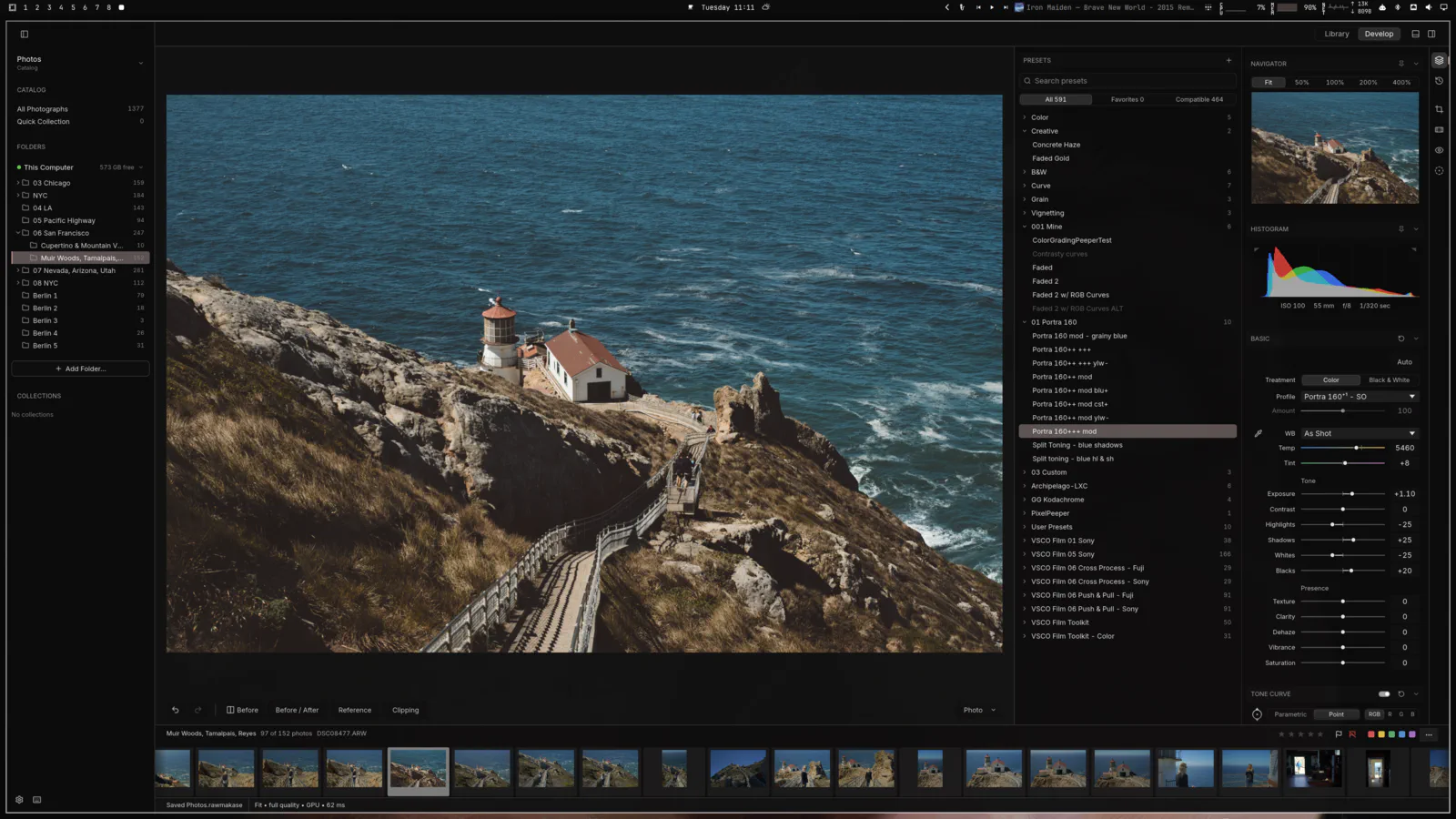
RAWmakase is a free RAW photo editor that runs on Linux, macOS and Windows. It opens a Lightroom Classic catalog with its ratings, flags, labels and keywords, applies the XMP presets you already own, and reads DCP camera profiles. It is MIT licensed, it has no subscription, and it never writes to your originals.
The AI is in the production, not the product
Most writing about AI in creative software is about generation: a prompt becomes an image, a sentence becomes a clip. This is the other story. The AI is in the making of the tool, and the repository states it in plain text.
The pattern holds in smaller commits. Adobe’s baseline exposure values were added for 49 more camera bodies, each taken from samples rather than guessed. Linear DNGs from iPhone ProRAW and Samsung phones, refused until now, open after a change this afternoon. This is not a demo. It is the tedious middle of a photo editor, and an agent is doing a large share of it.
What the editor does
The control set is the one a Lightroom user expects, which is to say it is long. White balance and auto tone, exposure, shadows and highlights, clarity, dehaze, curves, HSL, colour grading, detail, crop, transform and lens corrections. The Library holds folders, collections, ratings, flags, labels, keywords and filters. Heal and Clone, brush, gradient and range masks exist and are labelled early. The catalog is an SQLite file on your disk, and every write is atomic.

One editor, three systems, Linux included
Adobe ships Lightroom Classic for macOS and Windows and has never shipped it for Linux. RAWmakase ships for all three, and the Linux build is not an afterthought tarball nobody tests.
macOS gets Apple Silicon and Intel builds for Sequoia or newer. Linux gets .deb for Ubuntu 24.04 and Debian 13, .rpm for Fedora 43, an Arch package with its PKGBUILD published, and a tarball, with aarch64 variants on the release page. Windows gets a per-user installer that needs no administrator rights, and a portable zip.
There is one codebase behind those four package formats, which is why the same panels, the same presets and the same catalog appear on each system. Colour and tone run on the GPU through Vulkan, with a CPU fallback for machines without a working graphics driver.
A review that aged in a week
LinuxLinks published a fair summary this month, and one sentence in it was already out of date: that the application uses LibRaw to open images. The dependency was removed days later. That is not a criticism of the review. It is a measurement of the pace.
The website shows the same velocity in a smaller way. Beside the downloads, rawmakase.com offers a paragraph of instructions written for an AI agent: install the latest release for my operating system, pick the right package for the CPU architecture, verify it against the checksums, tell me how to launch it. A desktop application now ships with a prompt for the agent that will install it.
The licence is the part that lasts
Adobe sells a rental. RAWmakase is MIT: the code can be read, forked, audited and built on any of the three systems, the catalog is a local file, and the originals stay untouched. When one developer can produce a working RAW editor in three weeks with an AI writing most of the commits, the software stops being valuable for the labour inside it and becomes valuable for the licence that keeps it available. A closed tool built at this speed would be one company’s asset. This one is not.
It is also early, and the honest version of this story says so. Masks are improving, not finished. The Windows installer is not code-signed. Importing a catalog with the right ratings and keywords is not the same as matching Adobe’s rendering slider for slider, and professionals judge an editor on the second thing. The claim is not that RAWmakase replaces Lightroom today. It is that the cost of a serious attempt has fallen far enough that one arrives in under a month, for three operating systems, with packages, checksums and a test suite.
Earlier this month the comparable case was ArtCraft, seven Adobe applications rebuilt in Rust with Claude’s help and released free, also on Linux, macOS and Windows. Two data points are not a trend, but they are the same method. Creative software is being rebuilt from the outside, at a speed that used to require a team and a budget, and the results are landing in public repositories where anyone can check them.
Sources
- rawmakase.com — product site, feature list and downloads.
- github.com/pch/rawmakase — source, commit history and releases (MIT).
- LinuxLinks — review of RAWmakase.